


Indice - Table of contents
Beyond Salsa Piano - The Cuban Timba Pian... 

- Beyond Salsa Piano Info Page
- Audio and Video Files
- Beyond Salsa Piano - Vol. 1 - 1900-51 - I...
- Beyond Salsa Piano - Vol. 1 Examples
- Beyond Salsa Piano - Vol. 2 - 1940-59 - I...
- Beyond Salsa Piano - Vol. 2 Examples
- Beyond Salsa Piano - Vol. 3 - Int. - 1960...
- Beyond Salsa Piano - Vol. 3 Examples
- Beyond Salsa Piano - Vol. 4 - Int. - 1979...
- Beyond Salsa Piano - Vol. 4 Examples
- Beyond Salsa Piano - Vol. 5 - Advanced - ...
- Beyond Salsa Piano - Vol. 5 Examples
- Beyond Salsa Piano - Vol. 6 - Melón Lewi...
- Volumes 7 and Beyond
- Purchasing Beyond Salsa Piano
Lo Nuevo[hide]
Reportes: From The St... : Jazz Plaza ...
Fotos: Tom Ehrlich : Irakere 50th Annivers...
Fotos: Tom Ehrlich : Irakere
Resenas: Joey Altruda Presents: El Gran ...
Reportes: From The St... : Cubadisco 2...
Timbapedia: 09. Interviews -... : Carlos del Pino ...
Fotos: Tom Ehrlich : 2023 Monterey Jazz Fe...
Fotos: Tom Ehrlich : 2023 Monterey Jazz Fe...
Fotos: Tom Ehrlich : 2023 Monterey Jazz Fe...
Fotos: Tom Ehrlich : 2023 Monterey Jazz Fe...
Grupos: Tirso Duarte
Grupos: Tirso Duarte : Discography
Grupos: Charanga Habaner... : 8. El bla bla bla
Grupos: Pupy y los que S... : Tirso Duarte

Fotos Del Día [hide]







Kevin Moore - Beyond Salsa Piano - The Cuban Timba Piano Revolution
Click here for the new Beyond Salsa Online Catalog
 |  |  |
|---|---|---|
 |  |  |
 |  |  |
Series Overview
Beyond Salsa Piano is a history and anthology of the role of the piano in the Cuban rhythm section – from its first appearance to the present. In a broader sense, it’s a study of the tumbao – the art of creating music from layers of repeating rhythmic and melodic phrases. Whether these syncopated figures are called tumbaos, guajeos, montunos, riffs or vamps, this Afro-Cuban concept lies at the heart of nearly every popular music genre from salsa to rock , funk, R&B, hiphop and jazz.
While presented as a set of method books, the series doubles as a history course and record collecting guide for listeners, dancers, and players of instruments other than the piano.
Perhaps the most important goal of the series is to provide a comprehensive understanding of how tumbaos are constructed, their central role in the texture of Latin music of all eras, and the endless possibilities they provide for creative composing and arranging.
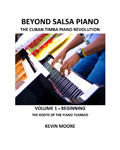
Volume 1 begins around 1900 and covers the origins of the tumbao concept using transcriptions from genres -- such as changüí, danzón, son and son montuno -- which pre-date the use of piano in Cuban music. This material is designed to be playable by near-beginners, players of other instruments, and arrangers seeking to acquire a basic facility on piano. From a strictly musical point of view, the material, especially the changüí and Arsenio Rodríguez tumbaos, should be very interesting to modern ears and useful in playing and arranging modern-day music.
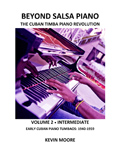
Volume 2 covers the period from 1940-1959 during which the piano became a constant and dominant presence in nearly every Latin rhythm section and during which Cuban music had a profound global influence on all forms of popular music. The difficulty level ranges from beginning to intermediate.
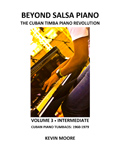
Volumes 3 & 4 cover the eclectic period that began with the Cuban Revolution – from 1959 to 1989.
Volume 5 addresses both the piano innovations and structural rhythm section innovations of the 1990s and 2000s – the so-called “timba” era.
From Volume 6 onwards, each book will concentrate on the style of one Cuban pianist, with note-for-note transcriptions, based in most cases on MIDI files performed by the pianist in question. For example, the subject of Volumes 5 through 8 will be Iván “Melón” Lewis, the phenomenally innovative pianist who played with the Issac Delgado group from 1995 to 1998.